
First Books
An unknown in his time, a visionary of hope and artistry, William Blake is now recognized and celebrated as a favorite son of England. He is honored for his poetry and accompanying artwork known as Songs of Innocence and Experience. Blake introduced these first books for children emphasizing identity, innocence, purity, and love for the Creator. Blake believed that children needed education in innocence and goodness, and they deserved books at their level of education. He wanted to use a poem, a story, or a lullaby to enrich their minds with truth. One of the first books Blake illuminated in this style, Songs of Innocence, was published 1789. An expanded collection, Songs of Innocence and of Experience showing two contrary states of the human soul was published five years later. The poem in question here is “The Lamb” and is included in the Innocence collection. Its counterpart in the Experience collection is “The Tyger.” These poems explore the innocence of childhood and the delicate balance between knowledge and corruption. Blake’s poem uses symbolism, assonance, and structure for didactic purposes; he wants to teach children to discover their own identity as valued and precious, and to enjoy their childhood.
Lesson Plan
Annotated Bibliography
Below are some sources that you may find useful when researching and teaching mythology in classrooms. As an educator, it is essential that you make connections in your own mind as to how myth is woven throughout contemporary society. Building these connections will help you lead students to understand mythology in more diverse ways.
Leonard, Scott and Michael McClure. Myth & Knowing, An Introduction to World Mythology. New

by Leonard & McClure
York, Kenneth King, 2004
This is a phenomenal book on Mythology. Within this section, you will find several sources that may be helpful for those looking to explore mythology more in-depth. In addition, they could be wonderful resources for teachers and or students within the classroom environment.
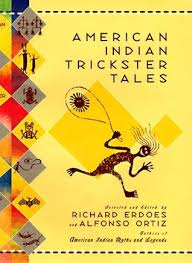
Stefanova, Ana. “Humour Theories and the Archetype of the Trickster in Folklore: An Analytical
Psychology Point of View.” Folklore: Electronic Journal of Folklore, vol. 50, 2012, pp. 63–86.
This article is extremely useful for educators who are lost when it comes to getting their students to engage with and be interested in mythology. Many educators have the ability and authority to show films in class, so by reading this article, teachers can implement more films into their lesson plans that connect with the myths they are trying to teach their students. This technique will get students excited to make connections with films that they might already be familiar with and incorporates media, which students find relevant, into a mythology curriculum.
Lallave, Juan Antonio, and Thomas Gordon Gutheil. “Expert Witness and Jungian Archetypes.”
International Journal of Law and Psychiatry, vol. 35, no. 5-6, 2012, pp. 456–463.
Jung’s theories of archetype, shadow, and the personal and collective unconscious provide a postmodern
framework in which to consider the role of the expert witness in judicial proceedings. Archetypal themes,
motifs, and influences help to illuminate the shadow of the judicial system and projections and behaviors
among the cast of the court in pursuing justice.
 Melody Symonds
tetsing!!
LikeLike