Myth and Literature
Coyote by name,
and Trickster by trade…
Welcome to my place!
Welcome Friends
To My Home Page
Hello friends, do I have a subject for you to chew on! What’s the subject you might ask? I found this diamond in the rough by sheer chance. You know, it’s one of those classes you think about taking but never take. Well, I took a chance, added it, and was second person on the waiting list. I’m happy to say I got in! The course is called English 495 “Myth & Knowing: An Introduction to the World of Mythology.” Chances are you’ve been preparing for this course since you were only a few years old. Sure, some economics majors can boast that they’ve read several books on Keynesian economics by the age of fourteen, but you’ll have a jump on those overachievers.
That’s because mythology and folklore majors will have been exposed to their subject matter since they were wee infants being read their bedtime stories. In fact, those bedtime stories are pretty much the subject matter.
Okay, so people probably won’t need you to explain the significance of vampires in popular culture. A deep knowledge of werewolf origins won’t matter that much on a resume either. However, if you can use that knowledge to create something not only captivating but also marketable, then you can find a great niche to make a living as a high school teacher, college professor, or even a writer. Just ask Stephenie Meyer. I’d tell you to ask J.R.R. Tolkien, but… well, you know. If you never put down your copy of Beowulf or collections on Narnia, then you just might find yourself at home amongst the folk and myth students. Studying folktales can provide insight into some of the most beloved stories in all of human history. You’ll be able to answer all the hard-hitting questions, like: Is it “wizard” or “warlock?” Why is Zeus such a jerk? And if Chris Hemsworth is so strong and powerful, why does it take him forever to capture Loki? Seriously, we want to know. It’s also pretty incredible how the same themes and characters can be seen across cultures, some of which had never had any contact with each other. Hey, originality is overrated anyway.
This is a fun course to have under your belt, specially if you’re an English major. You’ll know a lot about things that most employers wish they knew. Check out my website, come alongside and explore, discover, and delight yourself with stories of tricksters throughout history.
Feel free to wander through my website for Mythology information developed in my presentations, lesson plans, and stories. My About the Author page is about me and my goals in teaching. My Home page is an overview of my website where I hope to achieve with the knowledge of developing a website. My Blog page is where I post cultural (even pop cultural) reflections, and what I have found in my research. It’s full of ideas and discoveries as related to myth and mythology in stories, movies, and the world around us. My Mythology page is where I continue to add to my own discoveries about myth, beyond my presentation. I will also developed, share, and make new discoveries too. Finally, my Scholarship page shows off my final essay, high school lesson plan, and annotated bibliography for my trip through the course.
What kind of classes does a mythology major take? Here are some: Fairy Tales, Folklore and the Bible, History of Folklore Theory, Monsters and Popular Culture. Some of these sound like really fun classes!
What is Mythology?
A branch of knowledge that deals with myth.
What is a Myth?
A myth is socially powerful traditional story. Myth is a narrative, a set of events structured into sequence, and traditionally transmitted from teller to teller and often from generation to generation.
– or –
At the most basic level, we can think of myth as a story that explains how the world came to be the way it is. That’s pretty broad, since people from different cultures have their own ways of understanding who they are and where they came from. Still, there are some defining characteristics common to all myths. Let’s take a look at some key concepts.
A myth almost always feature gods and goddesses. Just about every culture and/or religion religion features some kind of ruling god, or perhaps a pantheon, a group of gods and goddesses.
Primary categories of Myths
Creation Myths
A creation myth is a symbolic narrative of how the world began and how people first came to inhabit it. While in popular usage the term myth often refers to false or fanciful stories, members of cultures often ascribe varying degrees of truth to their creation myths.
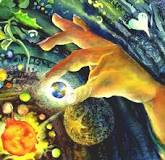
Creation Myths tell a special kind of story called a cosmogony, a word deriving from Greek that means, literally, “the birth of order”(32 McClure)
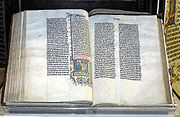
https://en.wikipedia.org/wiki/Genesis_creation_narrative
From the beginning of time, similar to Genesis, the birth of the earth.
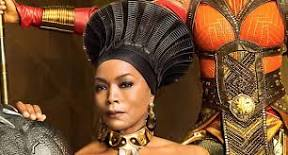
The Female Divine: Angela Bassett as Romonda
The Male Divine: Chadwick Boseman as the Black Panther

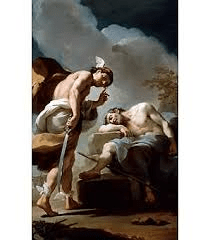
Trickster Myths : In mythology, and in the study of folklore and religion, a trickster is a character in a story who exhibits a great degree of intellect or secret knowledge, and uses it to play tricks or otherwise disobey normal rules and conventional behavior. Wikipedia
In native American mythology, Coyote is a trickster hero. That means he was really into pranks. This is what we’re dealing with, according to Wikipedia.
Sacred Places:

About Us
Melody Symonds
Get In Touch
College of Humanities
Department of English
https://www.csun.edu/humanities/english
Drop By
California State University, Northridge
18111 Nordhoff Street
Northridge, CA 91330
 Melody Symonds
Hi Melody!!
LikeLike
Coment testing number 1
LikeLike