World Mythology
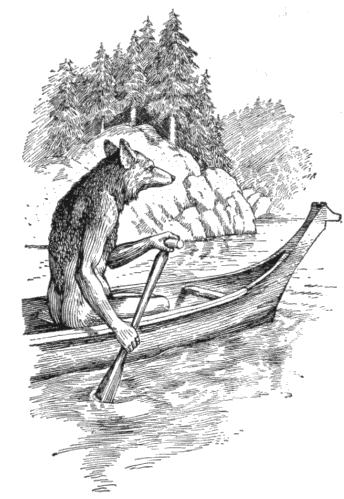
Welcome to my Mythology Page, friends! From here, we’ll embark on an adventure, an exploration of stories and concepts related to mythology and different world myths. For those who are new to the mythical world, get ready for a treat! Coyote and I will navigate these murky rivers into safe lands, where we will find answers to our inquiries, and reach a destination of enlightenment.
First, let’s define mythology. According to Myth and Knowing: An Introduction to World Mythology, myths are “ancient narratives that attempt to answer the enduring and fundamental human questions.” Lots of us have read something of the Greek, Roman, and Egyptian gods in grade school or middle school. Every culture has its own myths, stories about gods and their magical deeds. Here, we’ll take a look at the defining characteristics of myths, as well as some examples.
One of my favorite stories, the most widely read young adult novels of recent years, is Percy Jackson and The Olympians in which a seemingly ordinary 12 year old discovers that his long-lost father is actually the Greek god Poseidon, ruler of the sea. Part of what made this series so popular, and so accessible to many readers, was the way it drew on classical myths, which are ancient stories passed down through time. This is one of my family favorites, just a really good story.
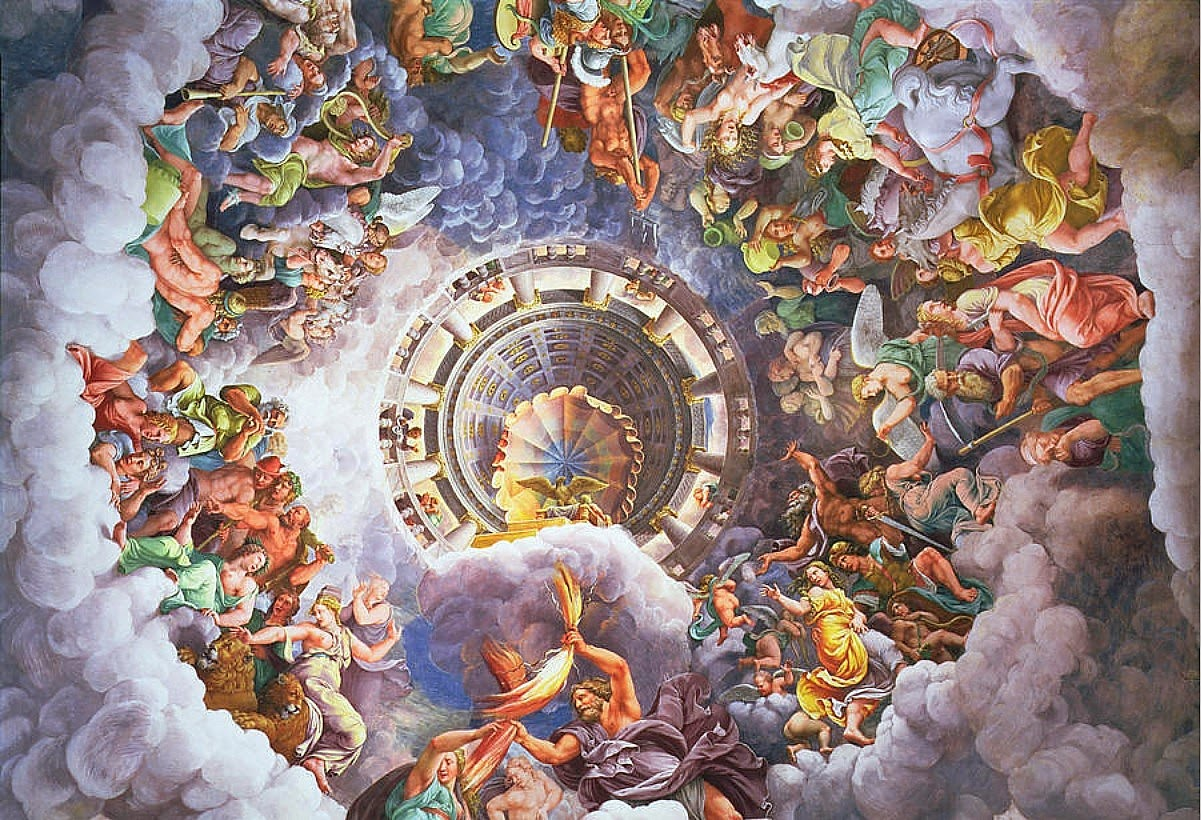
You may be familiar with characters like Poseidon, his brother Zeus, king of the gods, Aphrodite, the goddess of love, or Ares the god of war. These Greek gods are often widely studied in schools and also depicted in art, such as this picture of Hercules killing the Hydra.
What Makes A Myth a Myth?
At the most basic level, we can think of a myth as a story that explains how the world came to be the way it is. That’s pretty broad, since people from different cultures have their own ways of understanding who they are and where they came from. Still, there are some defining characteristics common to all myths:
Myths almost always features gods and goddesses. Just about every culture and/or religion features some kind of ruling god, or a pantheon, a group of gods and goddesses. We’ve already mentioned the Greek gods, who exist in a complicated family network of brothers, sisters, sons, daughters, nieces, nephews, and so on. Like any family, these guys love to bicker, and they make lots of mischief among themselves.
Myths tell about heroes. Similar to gods, but somewhat lower in status, we find the heroes. Heroes may be sons or daughters of gods, like Percy Jackson, or sometimes they’re fully mortal. Heroes have supernatural powers or abilities that elevate them above the ordinary. These characters usually interact with the gods, mediating between the human and the divine. Sometimes they have to go on a quest or journey or accomplish some kind of difficult feat.
Myths explain natural phenomena. Myths come from a time when science and technology were way less precise than they are today. Still, people have always looked around them and asked questions like, “Why is the sky blue? Why does it get dark at night? What causes an earthquake?” Perhaps you’ve heard someone comfort a child during a thunderstorm by saying something like, “Don’t worry, it’s just God going bowling.” Similarly, myths evolved to explain why certain natural events took place. Myths like these might also explain certain rituals or ceremonies that could be used to appease the gods during difficult times. For example, Chinese myths about Ba, the drought goddess, were used to help people pray for rain.
Myths were passed on by oral tradition. Many of the oldest myths arose in societies with primitive writing systems or no writing systems at all. Myths fulfill an important function for societies where people get their information orally. Passed down from generation to generation, myths explain how a tribe or culture came to be, how to correctly worship a culture’s gods and goddesses, and might also contain important historical information about past kings and heroes.
Some Common Types of Myths
The Creation Myth
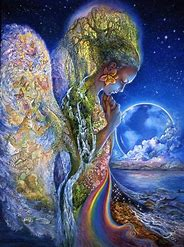
As we’ve said before, one of the importance functions of myths is to explain the world around us in a literary rather than a scientific way. One of the most enduring questions of humanity is ‘How did we get here?” An example: In the Iroquois creation myth, the Earth was formed on the back of a turtle. When the Sky Woman fell through a hole in heaven, the turtle rose up to catch her while she gave birth to twin sons, one good and one evil.
The Hero’s Journey
In a classic myth type, the half-god, half-human Percy Jackson has to go on a dangerous journey to discover himself and protect his family and society. We call this the Hero’s Journey, in which a dangerous quest leads to self-knowledge and fame.
The Trickster Myth
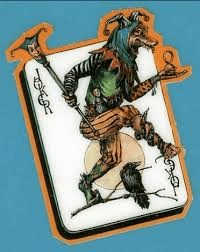
Trickster myths are folk tales that feature an animal or human character (or one who’s both) that engages in deceit, violence, and magic. Trickster tales often, but not always, explain features of the world. The Trickster stories are the best stories, laced with chaos, betrayal, deceit, you name it. Tricksters are complex and often contradictory figures who are difficult to put into a box. They are ambitious yet lazy, heroic yet cowardly. Sometimes the Trickster is placing the stars in the sky, and other times he’s stabbing someone in the back for a bit to eat. Modern examples of a Trickster: Bugs Bunny, the Joker, and Loki. These three demonstrate some of the multiple forms a Trickster can take. They may stand on opposing ends of the moral spectrum, but they’re all Tricksters! The Tricksters are my favorites, so let’s spend a little more time here…
Tricksters – “The Embodiment of Ambiguities”
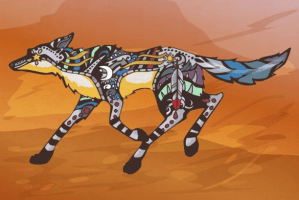
“Always hungry for another meal swiped from someone else’s kitchen, always ready to lure someone else’s wife into bed, always trying to get something for nothing, shifting shapes (and even sex), getting caught in the act, ever scheming, never remorseful” (247).
Arguably the most recognizable of all the mythological archetypes, “tricksters provide “real spark” in myth narratives – they reflect humanity.“
“The Trickster is myth come alive to meet us where we live.” (247).
Trickster Characteristics
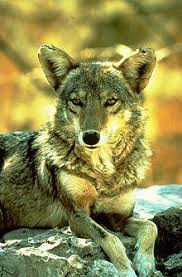
– Often takes animal form
– Mischievous, greedy, selfish
– Tricks gods, often helps men or giants versus the gods
– Makes up for physical weakness with cunning and subversive humor
– Alternates between cleverness / stupidity, kindness / cruelty, deceiver / deceived
– Breaks taboos and creates culture
Examples: Coyote (American Indian), Spider (Africa), Monkey (China), Loki (Scandinavia); Prometheus and Hermes (Greece)
There’s more to explore about the Trickster myth. At the end of this page please take a peek at my Powerpoint presentation, done together with my English 495 group members. It’s focused specifically on a “Trickster” myth called “How Coyote Placed the Stars.” The presentation is just a guide, one method out of many, for teaching mythology. The myth is a really cute story in case you want to put together a lesson. This one’s a blast to do with your students. There’s a companion Lesson Plan on my Scholarship page, so check that out too.
I’ve also included a Powerpoint presentation, done together with my group members in my English 495 class. It’s focused specifically on our myth, Coyote the Trickster. This presentation includes:
- Common Core Standards
- Objective (for students to make a video storyboard)
- Agenda
- Week by Week (directions on Scaffolding and the Kahoot game)
- Masks (Group exercise – Identity the trickster: Coyote, Bear, Wolf, and Meadowlark)
- Features to stimulate all five senses
![]() The Trickster Archetype
The Trickster Archetype
 Melody Symonds
Test Test!
LikeLike